

When we started buying insulation for our backyard office, every bag had a big R and a number on it. R13, R15, R19, R30. I had no idea what that meant. If you are in the same spot, here is the plain version, plus exactly what we used and how much.
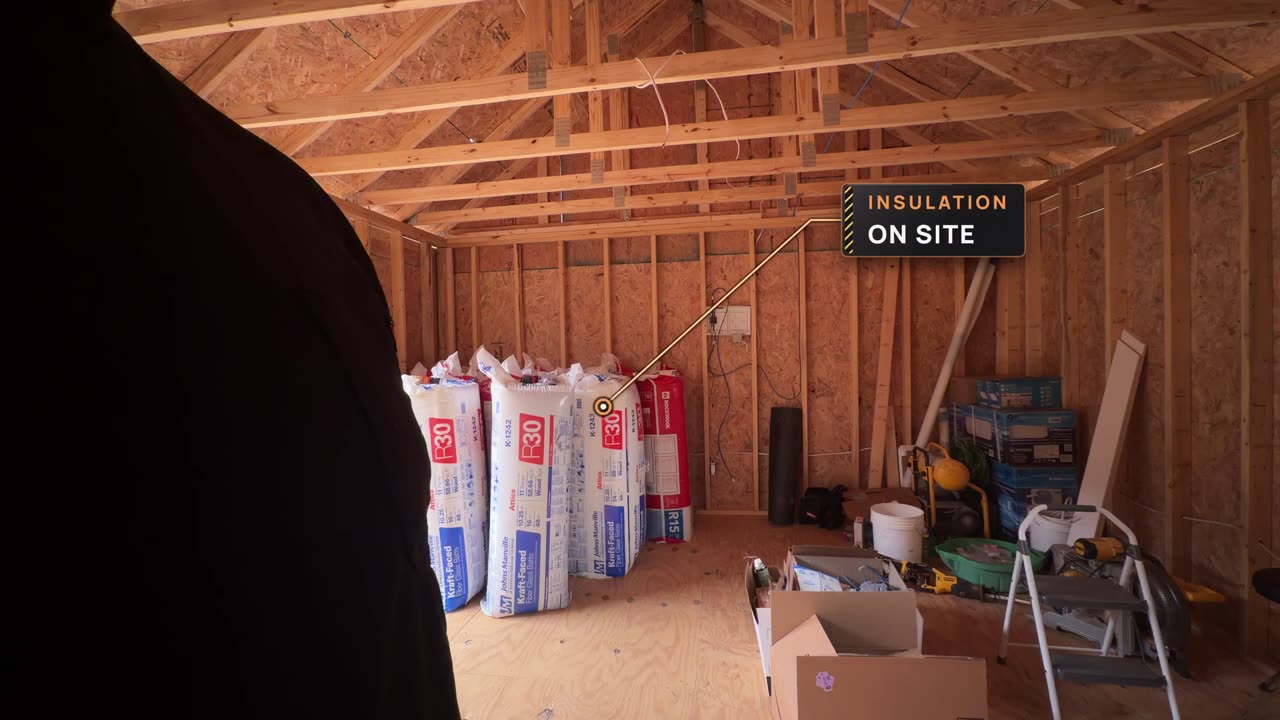 Insulation on site. Getting it here was its own adventure.
What the R means
R is for resistance. It is how hard the insulation fights heat trying to get through it. The bigger the number, the bigger the fight.
In summer, the heat is trying to get in. In winter, the heat you paid for is trying to get out. Insulation slows both down.
Hank, our crew HVAC guy, puts it this way: insulation does not make heat or cold. It just buys your AC and heater more time.
What we put where
| Spot | What we used | Why |
|---|---|---|
| Floor | R30, paper facing up | The office sits on piers, so cold air moves right under the floor all winter |
| Walls | R15 | That is about the most that fits in a 2x4 wall |
| Ceiling | R30 | The roof sits in the Alabama sun getting cooked all day |
The floor. Our office is up on piers, so underneath is basically a wind tunnel. We put R30 between the floor joists with the paper side up, toward the room. I refuse to work with cold toes. My office, my rules, warm feet.
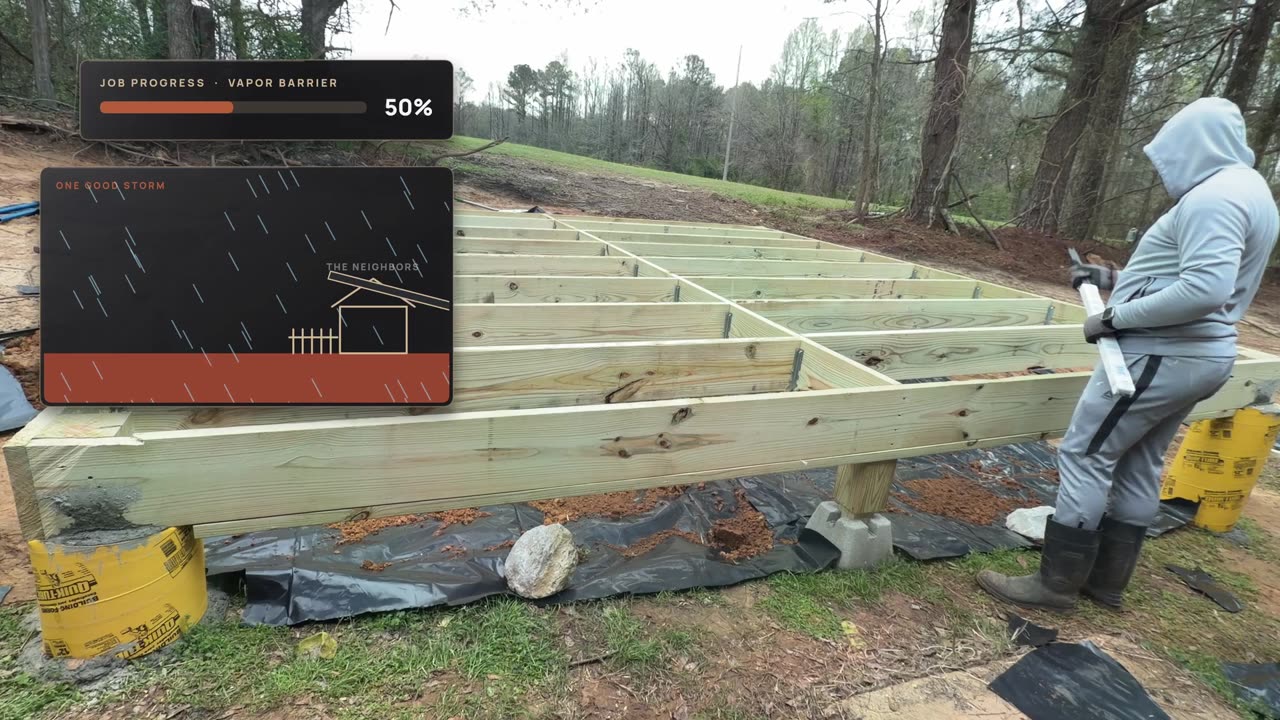 The floor frame on piers. Underneath is open air, so the floor needs real insulation.
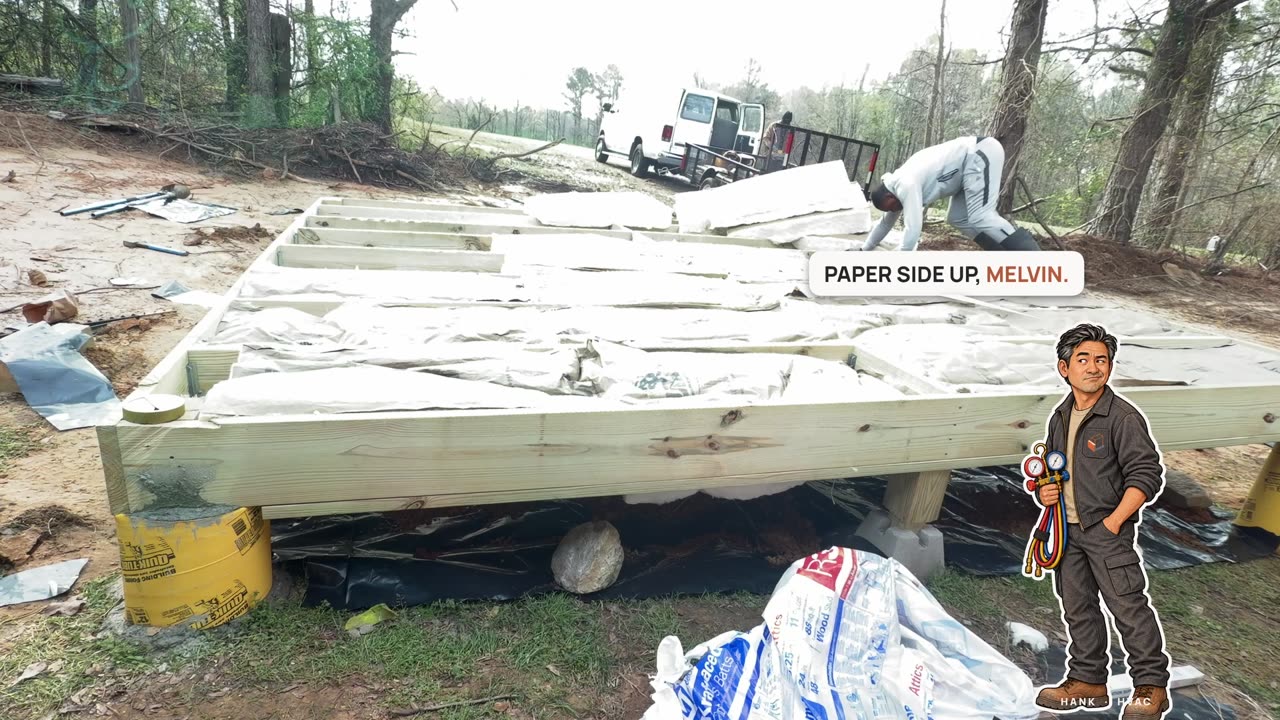 R30 between the joists, paper side up.
The walls. We framed with 2x4s, and a 2x4 wall is only about 3 1/2 inches deep. R15 is made to fill that space. You might think you could stuff a thicker R19 batt in there for extra credit. Do not do it.
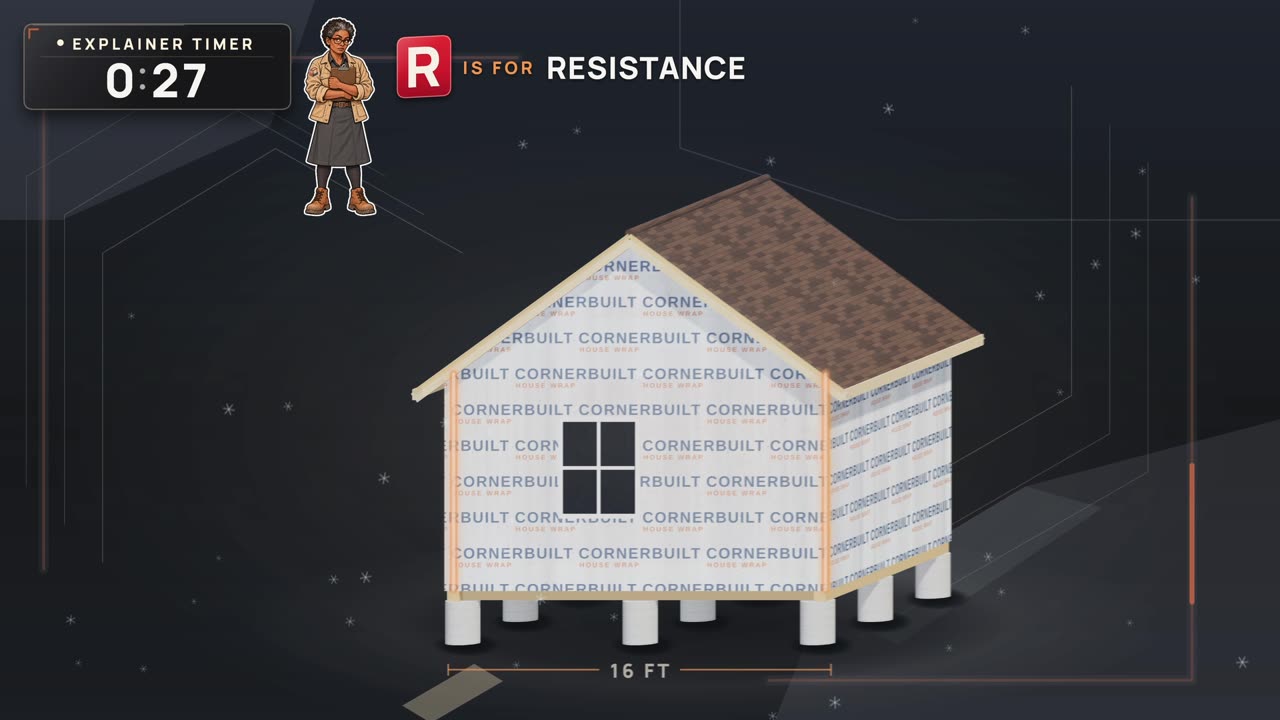 A 2x4 wall is 3 1/2 inches deep. R15 fits it exactly.
The ceiling. Heat rises, and the roof takes the sun all day. That is the spot where you want the biggest number, so the ceiling got R30.
Do not squish it
This surprised me. Squished insulation works worse, not better. Fiberglass works because of the tiny pockets of air trapped between the fibers. Crush it and you crush the air pockets, and the R-value drops. Fill the cavity snugly, but let it stay fluffy.
Think of it like a puffy winter coat. Zip it over three hoodies and it is not keeping you any warmer.
How many bags it took
For one 16 by 16 room:
- Floor: 3 bags of R30. They did not fit in my car, so I had to go back to the store that night with a borrowed truck.
- Walls: 11 bags of R15.
- Ceiling: 3 bags of R30.
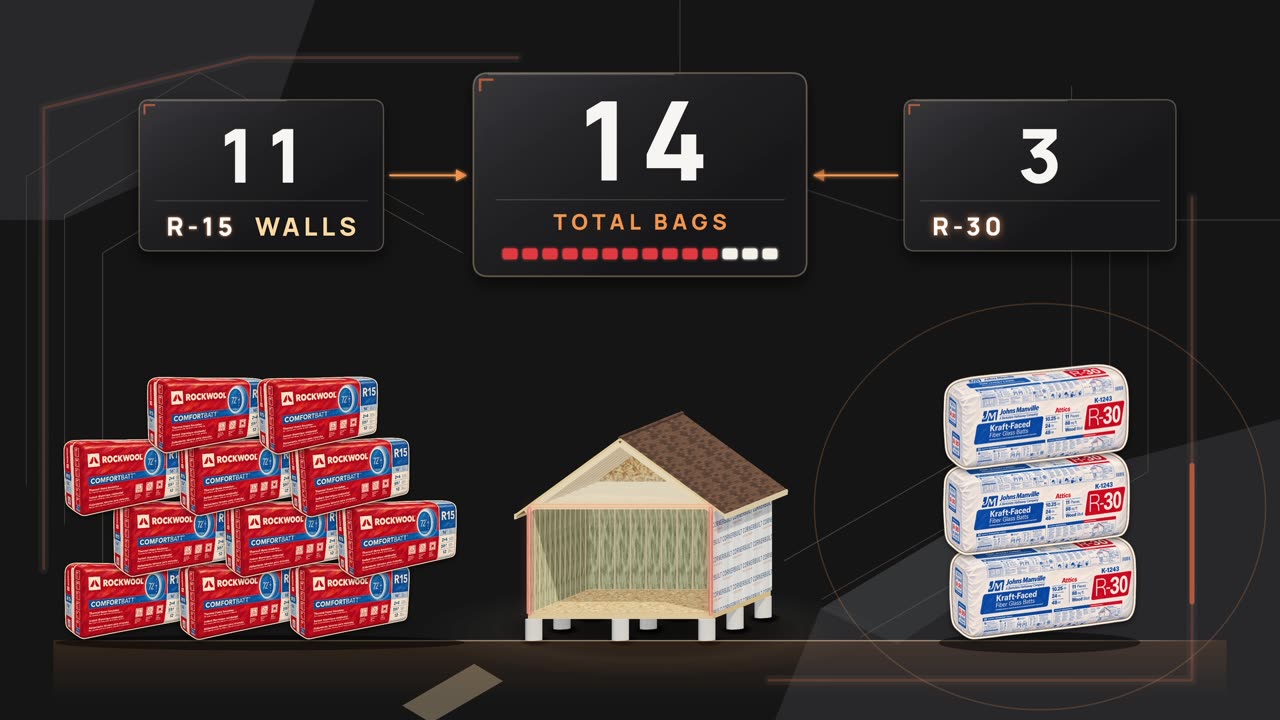 11 for the walls, 3 for the ceiling. 14 bags, and none of them fit in a car.
That is 14 bags just for the walls and ceiling. If 3 did not fit in my car, I did not need a calculator to know 14 would not either. I needed a truck. Shout out to my brother-in-law BJ, who hauled them in his truck bed and trailer.
Tip: check the square footage printed on the bag, and measure your wall and ceiling area before you go. Window and door openings come out of the total.
Wear the gear (learn from me)
Fiberglass is exactly what it sounds like. It is glass. Tiny little pieces of glass, and they would love to move into your arms.
Wear all of it:
- Gloves
- Long sleeves
- A mask or respirator
- Goggles
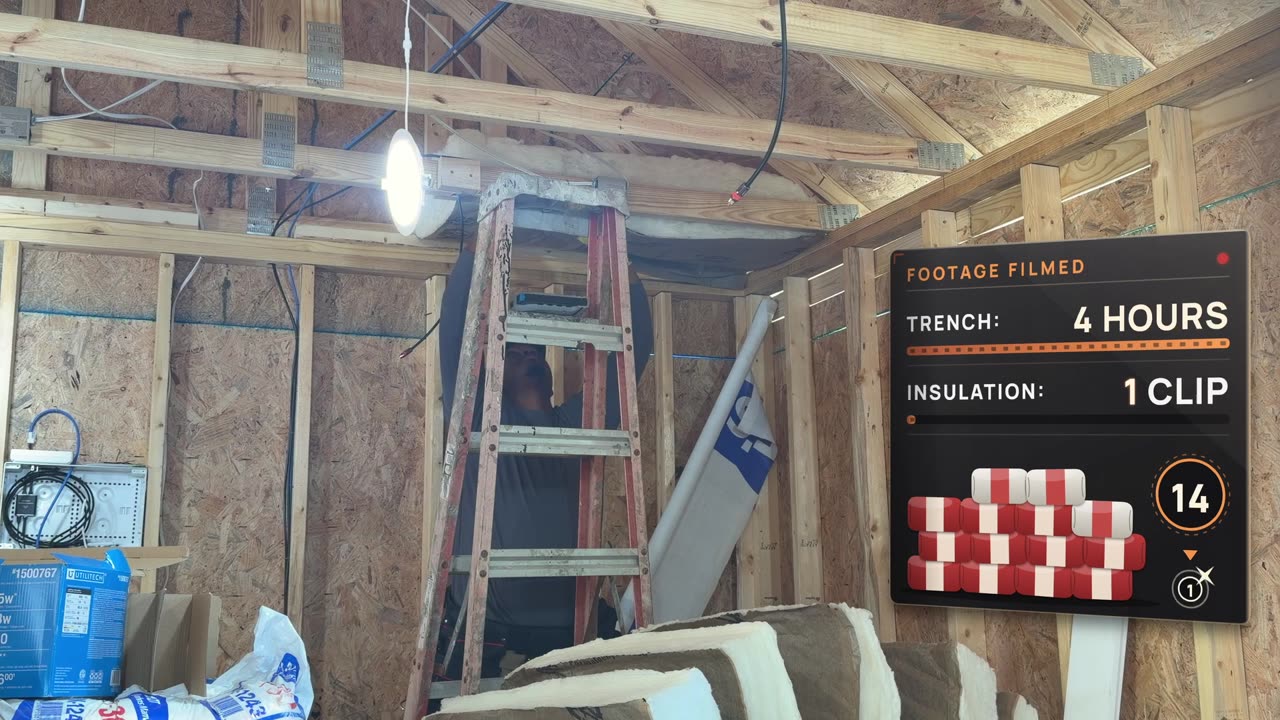 I filmed the trench for 4 hours and the insulation for 1 clip. This is that clip.
I did not wear everything I should have. I itched for the next three days like I owed somebody money. Do not be like me.
Watch it
The floor insulation is in chapter 1 of We Had 61 Days to Build an Office Before Our Baby Arrived, and the wall and ceiling insulation is in chapter 4, around 28 minutes in.